China → USA · one lane only

Freight shipping from China to USA

Sea, air, DDP and Amazon FBA — cleared through US customs and delivered to your door, with every tariff layer priced in writing.

Shenzhen-basedPort-to-port and door-to-door priced separatelyEvery quote dated

178 Section 301 exclusions expire Nov 9, 2026

Lane snapshot

Verified Oct 16, 2026

Port-to-port figures, publisher-attributed. Duty and door-to-door delivery are quoted separately, both dated.

What a China-to-USA rate actually contains

Data last verified:

A port-to-port index and a door-to-door quote are not the same number. We state which one you are looking at, what is inside it, and the date it was issued.

Public index snapshots — attributed, dated, never blended

These are publisher indices, not our prices. Each row keeps its own issue date and caliber. We do not average them, and we do not present one publisher's figure as the market rate.

Third-party freight index snapshots. Verified Oct 16, 2026.
MeasureValueMovementAs ofPublisher / caliber
World Container Index — compositeUSD 4,351 / 40ft−2% week on week2026-10-08DrewryPort-to-port, 40ft container, spot, excludes surcharges and duties
Shanghai → Los Angeles (WCI route)USD 7,624 / 40ftreported for the same week2026-10-08DrewryPort-to-port, 40ft container, spot, excludes surcharges and duties
Asia → US West Coast (FBX01)USD 8,149 / FEU−2% week on week2026-10-13Freightos Baltic IndexPort-to-port, 40ft equivalent, spot index — not an all-in door-to-door quote
China → North America (air)USD 5.77 / kg+3% week on week2026-10-13Freightos Air IndexAirport-to-airport, chargeable weight, excludes pickup, entry and duties

Indices are port-to-port and exclude origin charges, US destination charges, customs filing and duty. A port-to-port index is not comparable to a door-to-door quote.

Transit time: port-to-port and door-to-door are different numbers

Data last verified:

“12–22 days” usually describes the vessel, not your shipment. Both columns below are planning ranges — the door-to-door one is what your customer will ask about.

Ocean and air transit ranges, US-bound from China. Planning ranges — see the last-verified date above.
LanePort-to-port (P2P)Door-to-door (D2D)
China → US West Coast (LA / Long Beach, Oakland, Seattle–Tacoma)12–22 days18–30 days
China → US East Coast (NY/NJ, Savannah, Norfolk, Charleston)32–45 days36–52 days
China → US Gulf (Houston, New Orleans)30–42 days35–50 days
China → inland US via West Coast rail (IPI: Chicago, Dallas, Kansas City, Memphis)20–30 days to the rail ramp25–38 days
China → US (air freight, major gateway to gateway)3–5 days5–10 days

Ranges are planning estimates for standard cargo in normal conditions, not commitments. They exclude blank sailings, terminal congestion, CBP holds and weather. Ask for the current figure before you book a downstream commitment.

The 2026 duty stack, layer by layer

US import duty is not one number. It is a base MFN rate plus whichever additional programmes name your product, plus government fees that apply even when the duty is zero. Each row below carries its effective date, its HTSUS Chapter 99 line where one exists, and a primary source.

Data last verified:

MFN duty (Column 1 General)

Depends on the 10-digit HTS code — from 0% to well over 20%

In effect — the base layer
HTSUS Chapter 99 / legal basis
HTSUS Chapters 1–97, Column 1 General
Effective from
Long-standing
Scope
Every commercial import into the United States.

Section 301 tariffs (Lists 1–4A and the 2024 review products)

25% (Lists 1, 2, 3) · 7.5% (List 4A) · 25% / 50% / 100% on the 2024 four-year-review product lines

In effect since 2018, rate changes phased
HTSUS Chapter 99 / legal basis
9903.88.01–.04 (Lists 1–3) · 9903.88.15 (List 4A) · 9903.91.01 and following (2024 review products)
Effective from
2018-07-06 (first list); current rates confirmed 2024-09-18
Scope
Annexed product lists covering thousands of HTS lines of Chinese-origin goods. List 4B was announced but never took effect.

Section 301 forced-labor tariff (the 12.5% layer)

12.5%

In effect from 2026-07-24 — the newest cost layer of 2026
HTSUS Chapter 99 / legal basis
9903.05.31 (mainland China) · 9903.05.43 (Hong Kong) · exemptions at 9903.05.86 (US Note 52(b)) · goods under Section 232 listed at 9903.05.90
Effective from
2026-07-24
Scope
Chinese-origin goods, with a published exemption list.

Section 232 national-security tariffs

Metals: 50% / 25% applied to full value. Vehicles and parts, wood products, patented pharmaceuticals and the 25% semiconductor tier are separate measures.

In effect — measured on full customs value since 2026-04-06 for metals
HTSUS Chapter 99 / legal basis
As listed in the HTSUS Chapter 99 subchapter III provisions cited by each proclamation
Effective from
Staggered by product; metals valuation change from 2026-04-06
Scope
Specific product groups (steel, aluminium, derivatives, vehicles and parts, wood, pharmaceuticals, semiconductors).

AD/CVD — antidumping and countervailing duties

Per order. Rates above 100% are common; some orders exceed 300%. Cash deposits are required at entry.

In effect — order by order
HTSUS Chapter 99 / legal basis
19 CFR Part 351 and the individual published orders
Effective from
Order by order
Scope
Product-specific. Common exposure for furniture, steel and aluminium products, solar cells, tires, and many consumer goods.

IEEPA tariffs (fentanyl and reciprocal)

No longer collected

Struck down 2026-02-20 — collection ceased 2026-02-24
HTSUS Chapter 99 / legal basis
Supreme Court decision in Learning Resources, Inc. v. Trump and Trump v. V.O.S. Selections (Roberts, C.J.)
Effective from
Collection ceased 2026-02-24
Scope
The IEEPA-based tariff programmes.

Section 122 temporary import surcharge

⚠️ Conflicting public accounts: 10% from 2026-02-24, with reports that it was raised to 15% two days later. Statutory cap is 15% for a maximum of 150 days.

Expired 2026-07-24 · CIT held the 10% basis invalid on 2026-05-07, appeal pending
HTSUS Chapter 99 / legal basis
Proclamation 11012; reported as 9903.03.01 in secondary sources
Effective from
2026-02-24 → 2026-07-24
Scope
A temporary balance-of-payments surcharge; it applied across the board rather than to listed products.

Section 301 product exclusions

Where an exclusion applies, the Section 301 duty on that HTS line is not owed (or is refundable) for the covered period.

178 exclusions extended to 2026-11-09 (23:59 ET) / 2026-11-10
HTSUS Chapter 99 / legal basis
USTR notice published at 90 FR (2025-21671), published 2025-12-01
Effective from
Various, extended by the 2025-12-01 notice → 2026-11-09 (23:59 Eastern Time) / 2026-11-10
Scope
178 specifically enumerated product descriptions with matching HTS lines.

De minimis (USD 800 duty-free entry)

Abolished. Low-value shipments no longer enter duty-free; duty, taxes and fees apply.

Ended 2025-05-02 (China/HK) and 2025-08-29 (all origins); changed to an indefinite suspension in June 2026
HTSUS Chapter 99 / legal basis
Executive Order 14324 and the implementing CBP/Federal Register notices, including 2026-12670 (2026-06-24)
Effective from
2025-05-02 for China and Hong Kong; 2025-08-29 for all origins
Scope
All modes except international postal channels, which were handled separately.

The "30-for-30" mutual tariff-reduction lists

⚠️ Not applicable yet. The lists are published but no reduced rate is in force, and no implementation date has been announced.

Announced 2026-09-28 — NOT in effect
HTSUS Chapter 99 / legal basis
Published under the U.S.–China Board of Trade framework; announced 2026-09-28
Effective from
No implementation date announced
Scope
Roughly USD 30 billion of goods on each side, about 1,700 tariff lines in total, with 77 lines on the US side including fireworks, household goods, toys, car seats and festive decorations.

UFLPA — Uyghur Forced Labor Prevention Act

Not a duty. The consequence is detention of the shipment and the cost of proving the supply chain clean.

In effect since 2022-06-21
HTSUS Chapter 99 / legal basis
UFLPA and the DHS entity list; rebuttable presumption
Effective from
2022-06-21
Scope
Priority enforcement sectors include cotton and cotton goods, tomatoes and tomato products, and polysilicon and solar products.

Second Section 301 investigation ("overcapacity" across 60 economies)

Not yet determined

Opened 2026-03 — no determinations announced
HTSUS Chapter 99 / legal basis
USTR investigation notice, 2026-03
Effective from
Ongoing
Scope
Alleged non-market overcapacity in specific sectors across 60 economies.

Verified Oct 16, 2026. Confirm the current position against CBP CSMS, the HTSUS and the Federal Register before relying on any figure for a shipment.

How we work

A China-based forwarder on the US lane. No US subsidiary, no borrowed logos.

China-based, US-lane only

One Shenzhen office, one trade lane. That focus is why the tariff detail stays current.

Every rate is dated

Date, caliber and inclusions on every quote. No undated price sheets.

US brokers and 3PLs, named

Licensed US brokers file the entry; vetted 3PLs run the warehouse. We tell you who does what.

We say what we do not know

Where a tariff measure is unsettled in law, the page says so rather than picking a number.

Frequently asked questions

The questions we actually get on the first call, answered without the sales padding.

How much does it cost to ship from China to the USA?
There is no single number, and any site that prints one is quoting a specific date, a specific caliber and a specific container. A port-to-port rate excludes origin charges, US destination charges, customs filing and duty. We quote port-to-port and door-to-door separately, put the date on both, and state whether carrier surcharges and duty are inside the figure.
How long does shipping from China to the USA take?
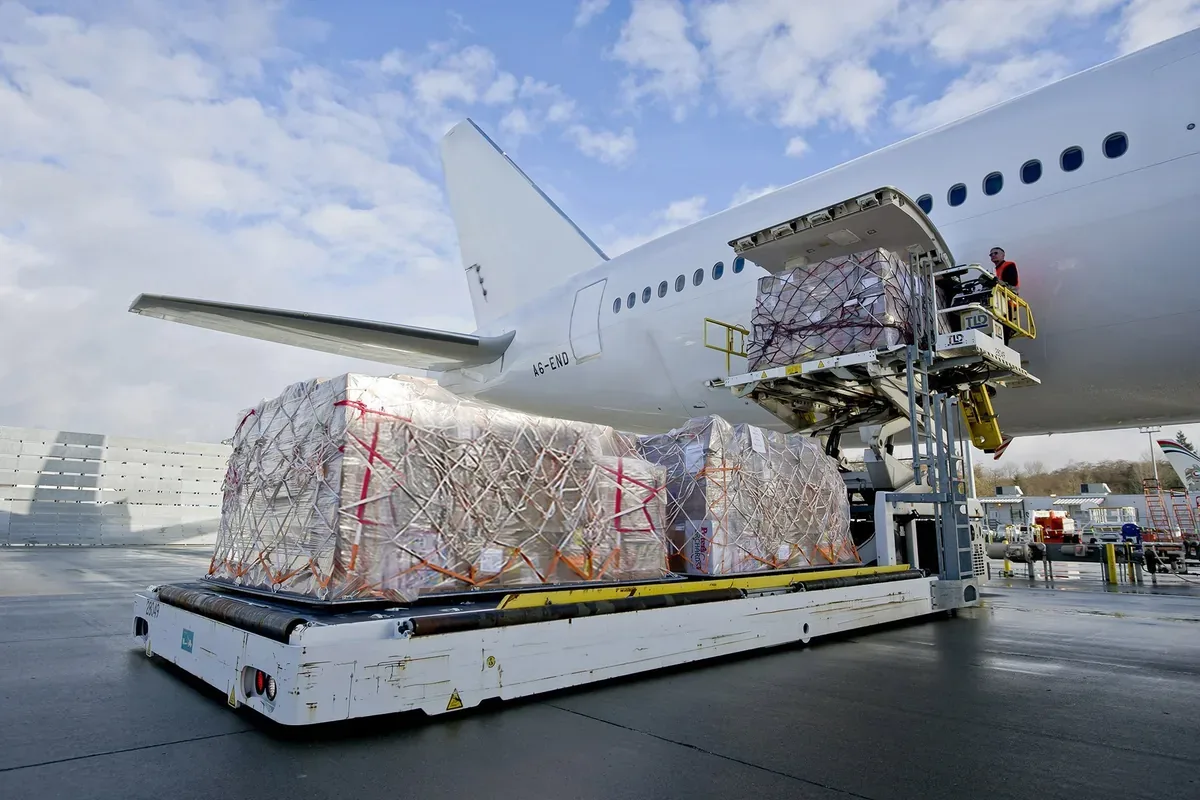
Ocean transit runs roughly 12–22 days port-to-port to the US West Coast and 32–45 days to the US East Coast. Door-to-door, add pickup, export clearance, US entry and final delivery — typically 18–30 days to the West Coast and 36–52 days to the East Coast. Air freight is 3–5 days airport-to-airport and 5–10 days door-to-door. These are planning ranges, not commitments.
Do you handle duties and customs clearance, or is that on me?
Either can work. If you want DDP we act through licensed US customs brokers and the duty stack is inside the price — but the duty number then depends entirely on your HTS codes, so we ask for them. If you are the importer of record, we still handle the filing, the bond and the port work and you pay duty directly at entry.
What is the biggest tariff change in 2026 that affects my import?
The Section 301 forced-labor tariff at 12.5%, effective 2026-07-24, is the newest cost layer for Chinese-origin goods. It has a published exemption list, but the list works at HTS line level, not at category level. Separately, 178 Section 301 product exclusions expire on 2026-11-09 — that is a dated cliff, not a gradual change.
Can you ship to Amazon FBA warehouses?
Yes. FBA first-leg needs the shipment to arrive compliant: correct FNSKU labelling, pallets built to Amazon spec, and a delivery appointment. We handle the origin side, the US entry and the appointment, and we will tell you before booking if your carton or pallet spec will be rejected.
Are your prices the lowest?
No, and we will not claim to be. Freight is re-priced weekly, and the cheapest quote in any given week usually excludes something that shows up later as a separate invoice. What we do commit to is a dated quote with its caliber and inclusions written out, so you can compare it against the next one honestly.

More answers, including bonds, entry documents and Incoterms, are on the full FAQ page.

Get a quote

Send the details, get a dated quote

Origin city, delivery ZIP, volume or weight, HTS code if you have one. Those four decide most of the number.

  • Port-to-port and door-to-door quoted separately, both dated.
  • Duty and government fees shown as their own lines, never buried.
  • We will tell you when we cannot confirm a figure, and why.

Prefer to talk? WhatsApp +86 188 2505 7036 or email sales@chinauscargo.com.

We quote port-to-port and door-to-door separately, with the date of the quote on it. If you have an HTS code, include it — it is what decides the duty figure.